

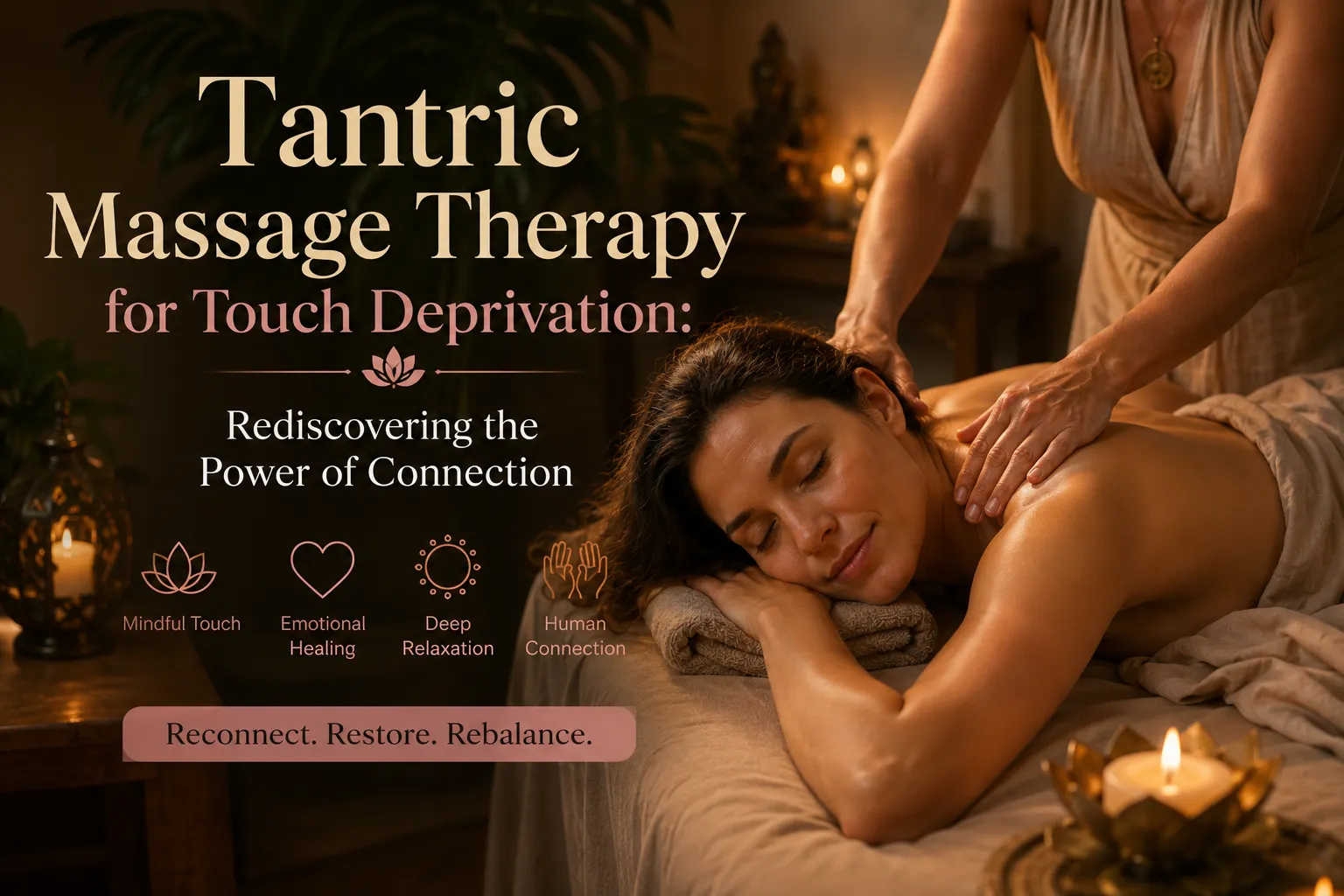
Touch deprivation is an informal way of describing the distress some people feel when wanted, safe physical contact is missing from their lives. A professional massage appointment may offer respectful contact, body awareness and calm for some adults. It cannot replace friendship, affection, community, healthcare or mental-health support.
That distinction is important in London. A person can move through packed trains, busy offices and crowded streets while receiving little meaningful connection. They may work from home, live alone, travel frequently or recover from a separation. Being surrounded by people does not automatically meet the need to feel known.
Tantric massage can be approached as one carefully bounded form of professional contact. A responsible session begins with accurate information, voluntary consent, clear limits, adaptable touch and the freedom to stop. It may help someone notice what safe contact feels like and what other kinds of connection are still needed beyond the treatment room.
What does “touch deprivation” actually mean?
“Touch deprivation”, “touch starvation” and “skin hunger” are common expressions rather than precise medical diagnoses. They can describe a felt absence of wanted touch, but they should not be used to diagnose the cause of low mood, anxiety, sleep problems or physical symptoms.
Three experiences are often mixed together:
- Limited physical contact: a person receives little of the touch they would welcome, such as a hug from a friend, affectionate contact with a partner or a reassuring hand from a relative.
- Social isolation: a person has relatively few social interactions, relationships or opportunities to participate with others.
- Loneliness: a person feels that the quality or amount of connection in their life does not match what they want. Someone can feel lonely in a relationship, at work or in a busy room.
These experiences can overlap, but they are not identical. More contact does not automatically resolve loneliness. A warm conversation can create connection without touch, while some people prefer relatively little physical contact and do not experience that preference as a problem.
Research supports careful language. A study of healthy adults found that lower self-reported social touch and social support were associated with greater loneliness, but this cannot prove cause. The World Health Organization report on social connection treats loneliness and social isolation as concerns requiring action across relationships, communities and public systems, not a single commercial intervention.
The useful question is therefore not “How much touch should I be getting?” It is “What kind of connection do I want, what is currently missing, and which response fits that need?”
Why London can feel crowded and disconnected at the same time
London offers constant contact with people, but much of it is functional. A commuter avoids eye contact on the Tube. Colleagues exchange messages about tasks. A hotel guest speaks to reception. A remote worker joins several video calls. These interactions may be necessary without feeling personally nourishing.
Life changes can narrow connection without becoming a crisis. Moving to London may separate someone from friends. Bereavement, divorce, retirement, caring responsibilities, disability or illness can also change the rhythm of contact.
Digital communication helps relationships continue across distance, yet it may not create the kind of presence a person misses. Different forms of connection perform different jobs. A message can express care, a group can create belonging, and appropriate touch can add physical reassurance.
London also makes it easy to hide disconnection behind activity. A full diary can contain few moments in which a person feels able to speak honestly or receive care. Recognising that gap is useful information.
Massage offers professional contact, not a substitute relationship
A massage session has a defined purpose, duration and professional role. That structure can make contact more understandable for someone who feels uncertain about touch. The client knows why they are there, what has been agreed and how to ask for a change. They do not have to perform friendship, offer emotional care in return or guess whether a social gesture will be welcomed.
Those same qualities create an important limit. The therapist is not acting as a partner, friend, counsellor or replacement family member. Warmth can be genuine while remaining professional. Payment secures an agreed service, not personal attachment or continuing access.
A responsible practitioner should never suggest that a client needs them because nobody else will understand, or that repeated massage is the only way to feel connected. The session can form part of a wider wellbeing routine, but it should leave the person with more clarity and choice, not less.
The connection ladder: five different needs, five different responses
The “connection ladder” is a practical way to decide what a person is seeking. Its rungs are not a fixed sequence, and no rung is superior to another. Each represents a different need that may call for a different response.
Rung one: connection with present body signals
The first rung concerns awareness. A person may have spent the day treating the body as transport for the mind, moving from screen to train to meeting without noticing temperature, posture, breathing or fatigue.
Massage can provide clear sensory information: pressure, pace, warmth, support and movement. Following those signals may help the client notice where they feel comfortable, where they are bracing and when they want something to change. This is not a diagnosis or proof that an emotion is “stored” in the body. It is ordinary information about present experience.
Useful awareness remains connected to choice. If the room feels cold, the client can ask for another covering. If a position becomes tiring, it can change. If pressure feels excessive, it can become lighter. The aim is not to surrender awareness but to use it.
Rung two: respectful professional contact
The second rung is the one a massage appointment can directly provide. Professional contact is agreed in advance, limited by the service scope and adjusted through continuing feedback.
The UK National Occupational Standard for body massage gives practical benchmarks: consultation, informed consent, privacy, hygiene, appropriate positioning, checks on wellbeing and adaptation of pressure, rhythm and technique. These details matter more than vague promises of connection because they show how respect operates in practice.
A client should know which service is being provided, which practitioner is involved, how long it lasts, what the complete cost is and how preferences will be discussed. Contact should never be assumed from the booking alone. The plan needs to be understood before the session begins and remain open to change.
Rung three: reciprocal personal connection
Personal relationships involve exchange. Friends, relatives and partners each bring their own feelings, boundaries, attention and needs. That reciprocity is different from a professional appointment, where the focus remains on the client within a paid role.
Someone who misses affectionate contact may name the need carefully to a trusted person: “I have missed our hugs. Would one feel comfortable for you?” The question makes room for both answers.
Reciprocity also includes forms of connection that do not involve touch. Sharing a meal, making a regular phone call, walking with a neighbour or listening without multitasking may address a need for recognition more directly than physical contact alone.
Rung four: belonging through routine and community
Connection becomes more durable through repeated opportunities. A weekly class, volunteering role, faith community, sports group or local club can make contact part of ordinary life.
The NHS guidance on loneliness recommends manageable actions such as talking to someone, joining a group, spending time around other people, volunteering and asking a GP about social prescribing. The emphasis on small steps matters. A person who feels disconnected does not need to construct an ideal social life in one weekend.
London contains many communities, but the number of options can feel overwhelming. Choose one activity linked to a genuine interest and attend often enough for faces to become familiar. Belonging usually develops through repetition.
Rung five: qualified support for persistent distress
Sometimes the missing connection sits alongside depression, anxiety, grief, trauma, social fear or another difficulty that deserves qualified support. Massage practitioners should not diagnose these conditions or interpret a client’s response as proof that healing has occurred.
If loneliness is persistent, daily life is becoming difficult or low mood and anxiety are hard to manage, a GP or appropriately qualified mental-health professional can help assess what is happening. The NHS page also explains routes to talking therapies and urgent help. Seeking clinical support does not make a wellness appointment meaningless. It simply gives each form of care the right job.
What a consent-led tantric massage session can offer
For an adult who wants professional contact, a well-run session can offer a period of focused attention in which expectations are clearer than they may be in everyday social life. The potential value comes from the quality of the structure, not from mystical certainty.
Someone considering Tantric Massage in London may appreciate an unhurried consultation, a private setting and the ability to influence the pace. These features should be confirmed with the provider.
The session may help a person:
- notice how they respond to predictable, agreed contact;
- practise communicating a preference without apology;
- experience care without needing to entertain or support another person;
- identify which environmental details help them feel comfortable; and
- distinguish physical contact from emotional belonging.
Experiences vary. A client may feel rested, alert, self-conscious or emotionally neutral. Someone may realise that massage is not the connection they were missing. No particular feeling is required.
Consent turns contact into a continuing conversation
Wanted touch depends on who is involved, what has been explained, what the person has agreed to and whether that agreement still holds.
The NHS principles of valid consent are written for medical care, but their emphasis on voluntary and informed choice offers a useful ethical reference. A person should be free from pressure, understand what is proposed and retain the ability to withdraw consent.
In a massage setting, continuing consent means that:
- agreement to the appointment is not unlimited permission;
- one area or technique can be accepted while another is declined;
- quietness, stillness or a bodily reaction never substitutes for permission;
- a previous session does not determine today’s preferences;
- a client can ask for more covering, lighter pressure or an explanation; and
- pausing or ending the session does not require an elaborate reason.
Simple phrases make this easier: “Please slow down”, “I would like more covering”, “Avoid that area”, “Can you explain what happens next?” or “I want to stop now.” The response reveals more about professionalism than promotional language.
Consent is especially important when someone identifies as touch deprived. A strong wish for contact should never be treated as willingness to accept every form of it. Need does not reduce a person’s right to be selective.
Preparing for a session when contact feels unfamiliar
A first appointment can bring mixed feelings. Someone may want contact and still feel nervous, or fear that changing their mind will disappoint the practitioner.
Preparation should reduce uncertainty rather than demand confidence. Read the provider’s general massage information and frequently asked questions, then confirm anything unclear directly.
Ask practical questions such as:
- What is included in the agreed service?
- How are boundaries and areas to avoid recorded?
- Can pressure, pace, conversation and room temperature be adjusted?
- What privacy, covering and hygiene arrangements are used?
- Are fragrance-free or alternative products available if needed?
- What health information should be disclosed before the appointment?
- How can the session be paused or ended?
Allow enough time to arrive without a sprint. Avoid using alcohol or other substances to overcome nervousness because they can impair judgement and communication. Reschedule if clear decisions feel difficult.
How yoga fits into the subject of connection
Massage and Tantra Yoga may both encourage attention to the body, but they are different practices. Yoga is generally participatory and may involve movement, meditation, breathing or philosophical study depending on the tradition and teacher. Massage is a practitioner-led service with an agreed professional scope.
A massage client should not be expected to follow a belief system, control their breathing or take part in an exercise that was not explained beforehand. Natural breathing is sufficient. Any optional practice should be described clearly, offered within the practitioner’s competence and easy to decline.
The useful point of overlap is awareness. Both can invite a person to notice present experience rather than judging how they think they ought to feel. In a massage session, that awareness should improve communication. It should never be used to justify crossing a boundary or interpreting the client’s emotions for them.
Choosing a London provider without relying on labels
The right provider should make the session easier to understand before asking for a commitment. Check the service scope, therapist information, price, duration, location or visiting arrangements, consultation process, hygiene, privacy, cancellation terms and contact route.
The most popular Tantric Massage parlour in London for one person may be unsuitable for another whose priorities, health considerations or travel needs differ. Popularity cannot tell you whether questions are answered clearly or whether the environment feels appropriate.
Likewise, the best tantric studio in London is not a universal title. A useful comparison considers evidence that affects the individual appointment: consistent boundaries, transparent information, realistic claims, clean materials, responsive communication and a straightforward way to raise concerns.
Review current therapist profiles for the information actually provided, then verify availability and any details that affect the booking. Do not infer competence, service scope or suitability from a photograph. Be cautious if a provider promises to cure loneliness, release trauma, guarantee emotional healing or create dependency on a particular practitioner.
After the session: turn insight into everyday connection
Feeling calm after an appointment does not prove that a larger problem has been solved. A person may enjoy professional contact while continuing to miss reciprocal affection. Reflection can point towards the right next step.
Ask four questions:
- What kind of contact felt comfortable, and what did not?
- Was it easy to speak, change the plan or stop?
- Did I want physical contact, emotional understanding, companionship or belonging?
- What is one realistic action I can take outside a professional appointment?
The final question creates a wider connection plan. It might mean inviting a friend out, arranging a family call, joining a weekly activity, speaking with a partner or asking a GP about support. Choose an action small enough to repeat.
Do not force physical affection from someone else because a session highlighted its absence. Friends and partners retain their own boundaries. Connection grows when both people can choose it.
When massage is not the right next step
Massage is not appropriate for every physical or emotional situation. New or unexplained pain, swelling, numbness, weakness, fever, an acute injury, a concerning skin condition or symptoms following a procedure may require healthcare advice instead.
Emotional urgency also matters. If a person expects the practitioner to remove profound loneliness, become a private attachment figure or provide trauma treatment, the appointment is carrying a role it cannot safely fulfil. A qualified counsellor, psychotherapist, GP or support service may be more appropriate.
If distress arises during the massage, the immediate response should be to pause, restore choice and ask what the client needs. The practitioner should not label tears as a breakthrough, continue to achieve “release” or make a clinical interpretation. Calm, discomfort, sadness, laughter, uncertainty and no noticeable emotional shift are all possible responses.
Frequently asked questions
These answers address the practical questions people often have when considering massage in response to a lack of wanted touch.
Can tantric massage cure touch deprivation?
Touch deprivation is not a formal diagnosis with a standard massage treatment. A professional session may provide wanted, structured contact for some adults, but it cannot replace reciprocal relationships, community or appropriate healthcare. Treat it as one possible wellbeing experience rather than a cure.
Is touch deprivation the same as loneliness?
No. A person may receive little physical contact without feeling lonely, or feel lonely while receiving regular touch. Loneliness concerns a perceived gap in meaningful connection, while touch deprivation usually describes a lack of wanted physical contact. The appropriate response depends on what is actually missing.
What if I become emotional during the session?
You can ask to pause, sit up, speak, change the plan or stop. Emotion does not need to be explained or interpreted. A massage practitioner should support immediate comfort and boundaries, not diagnose the feeling or claim that trauma has been released.
Do I need to explain my personal life to the therapist?
No. Share information that affects safety, comfort and the agreed service, including relevant health concerns, sensitivities and boundaries. You do not owe a detailed relationship history. A professional consultation should respect privacy while gathering what is necessary for the appointment.
Can massage help me become comfortable with touch again?
Some adults may find predictable, consent-led contact easier to navigate than informal touch, but responses vary. Start with clear limits and communicate throughout. If touch is connected to trauma, panic or significant distress, consult an appropriately qualified mental-health professional rather than using massage as exposure therapy.
How often should someone book for touch deprivation?
There is no evidence-based schedule for this purpose. Frequency should not be prescribed as a cure for loneliness. Consider budget, personal comfort, health factors and whether appointments form a balanced part of life rather than replacing efforts to build reciprocal connection.
What is the clearest sign of a professional session?
Look for consistency between what is advertised, explained and delivered. The provider should confirm scope, cost, duration, privacy, hygiene and boundaries, welcome questions, obtain consent and respond appropriately when the client requests a change.
Rediscover connection without asking one session to do everything
The power of connection lies in recognising its different forms. Body awareness can reveal a need. Professional massage can offer respectful, bounded contact. Friends and partners can provide reciprocity. Groups and routines can create belonging. Qualified professionals can support persistent distress.
No single rung replaces the others. A massage appointment may still be valuable precisely because it has a clear role. It can give an adult time to notice present sensations, practise direct communication and experience contact that remains voluntary from beginning to end. It should not claim to cure loneliness or stand in for the relationships that make ordinary life feel shared.
To discuss a professional appointment with clear expectations, privacy and individual boundaries, contact Tantric Massage London and confirm the current details before booking.
Sources
These sources support the article’s distinctions between social connection, loneliness, consent and professional massage practice.
- World Health Organization: From loneliness to social connection
- NHS: Get help with loneliness
- National Occupational Standards: Provide body massage treatments
- NHS: Consent to treatment
- Scientific Reports: Social touch, social support and loneliness